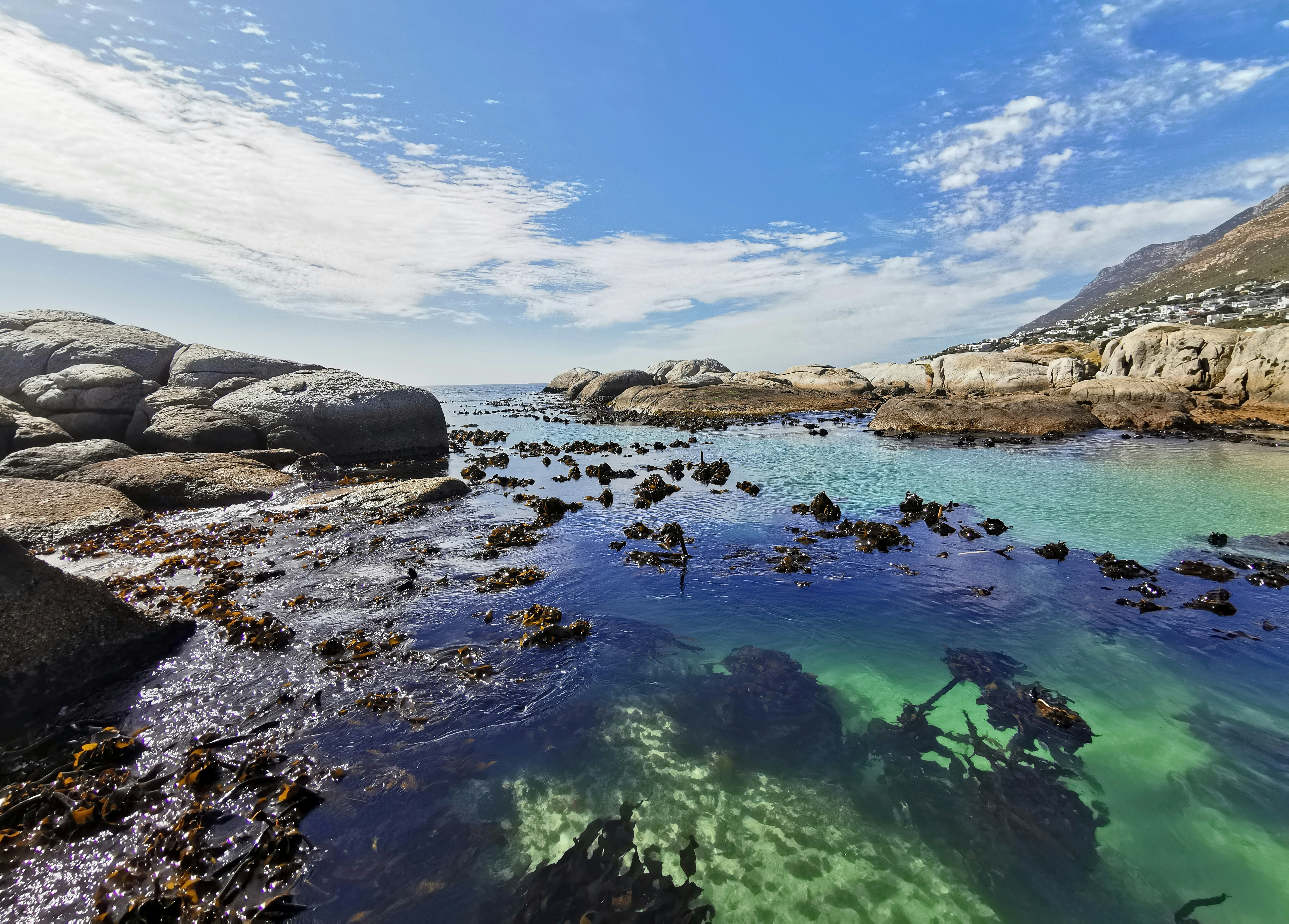
This World Ocean Day, the ocean just handed us two pieces of good news worth celebrating — and one honest reason to keep pushing. Here’s the case almost nobody makes: a protected ocean isn’t a cost. It’s the best return on investment we’ve got.
Feature photo by Ayra Redwood on Unsplash
Let’s start World Ocean Day with something we don’t say nearly often enough: we just hit a number worth celebrating.
This year, for the first time in history, more than 10% of the ocean is officially protected. The exact figure — confirmed in April by the UN’s conservation monitoring centre and the IUCN — is 10.01%, up from 8.6% just two years earlier. In the past two years alone, the world added roughly 5 million square kilometres of protected ocean, an area bigger than the European Union.
For most of human history that number sat near zero. In 2000 it was about 0.7%. So crossing 10% is a genuine milestone — proof that the idea of protecting the sea has gone from fringe to mainstream policy in a single generation.
And there’s a second win hiding behind the first. This past January, the High Seas Treaty entered into force — the first global agreement that lets nations create protected areas in the open ocean, beyond any country’s borders. That matters far more than it sounds, and I’ll come back to why.
The argument we keep getting wrong
Here’s what I really want you to reimagine this World Ocean Day. We’ve spent decades stuck in a bad debate: protect the ocean or use it. Conservation on one side, the economy on the other, pick a team. It’s a false choice — and an expensive one.
The most comprehensive recent work on this comes from the High Level Panel for a Sustainable Ocean Economy — a coalition of 19 world leaders backed by 300-plus scientists. After years of analysis, they land on a deceptively simple conclusion: we can produce more by protecting more. Protection and prosperity aren’t opposites. Done right, they’re the same strategy.
If that sounds like wishful thinking, look at the receipts.
The numbers that end the argument
- For every $1 invested in ocean health, the return is about $5 in benefits. Go find another asset class with a 5-to-1 payoff.
- A healthy ocean already contributes on the order of $2.5 trillion a year in goods and services, with a total asset value estimated around $24 trillion. If the ocean were a country, it would be one of the largest economies on Earth.
- Managed sustainably, it could produce up to 6 times more food and 40 times more renewable energy than it does today — by 2050.
- And it’s a jobs story. The number of people working in the ocean economy could swing by tens of millions this century, depending entirely on whether we choose the sustainable path or keep grinding ecosystems down.
Nature, in other words, creates jobs. A living ocean is a working ocean.
How far we’ve come

That 10% milestone is worth putting in context. It actually clears a target the world set back in 2010 — to protect 10% of the ocean by 2020. We got there. Just six years late. That’s the honest shape of ocean progress: real, accelerating, and consistently slower than we promise.
Why the next 20% runs through the high seas
The goal now is bigger and the clock is tighter: 30×30 — protecting 30% of the ocean by 2030. We’re a third of the way there, with four years to cover the rest.
Here’s where that second piece of good news comes in. Almost all the protection we’ve built so far sits in national waters — the slices of ocean each country controls. Those are now about 23% protected. But the high seas — the vast international ocean beyond any border — are barely touched: under 2% protected, despite making up the overwhelming majority of the ocean’s living space. You simply cannot get from 10% to 30% without protecting the high seas.
And until this January, there was no legal way to do it. The High Seas Treaty changes that. For the first time, the world has a mechanism to designate protected areas in the open ocean — the single biggest piece of the 30×30 puzzle. The treaty taking effect is what turns “30% by 2030” from a slogan into something physically possible. Now governments have to keep ratifying it and actually use it — but the door is finally open.
The honest part
I won’t pretend it’s all smooth sailing. Two caveats belong right here.
First, “protected” on a map isn’t the same as protected in the water. Of that 10%, only about 3.3% is fully or highly protected — genuinely off-limits to the most damaging activities — and that share could even shrink. We’ve confirmed management is actually working for just 1.3% of the ocean. Coverage is the easy part; enforcement and effectiveness are the hard part.

Second, the pace. To hit 30% by 2030 we’d need to triple today’s coverage — which means protecting the ocean roughly seven times faster than we did over the last two years. That’s a tall order. But “behind schedule” is not “hopeless.” We’ve crossed 10%. The treaty is in force. The science is settled. What’s holding us back now isn’t whether protection works — it’s whether we decide to fund and finish what we’ve started.
Reimagine it with me
The quiet beauty of an investment framing is that small choices count too. You don’t have to be a head of state to move money toward a healthier ocean.
- Share the reframe. Most people still believe protecting the ocean costs us. Tell one person it pays us back 5 to 1 — and that we just crossed 10%.
- Back the policy. Follow and amplify the groups pushing 30×30 and High Seas Treaty implementation — the World Ocean Day network and the UN’s World Oceans Day events on June 8 are easy places to start.
- Get your hands dirty. Find a local cleanup through the Ocean Conservancy or Surfrider.
- Vote with your cart. A few honest, ocean-friendly swaps — none of which ask you to give anything up — keep plastic and pollutants out of the water in the first place. I rounded up the ones actually worth it here.
We just protected a tenth of the ocean and unlocked the door to the rest. The ocean isn’t too big to fail. It’s not too big to fix. And it’s far too good an investment to stop now.
Happy World Ocean Day. Let’s reimagine it as what it is: the best deal on Earth.
Get the next swap before it’s public
I send new vetted swaps, the economics behind them, and the occasional warning about a product that did not earn its hype. No spam, I never sell your address, and you can unsubscribe anytime.


Leave a Reply